Building Community in the Heart of Kyoto
What I discovered through the Small Lawn Plaza Experiment was one of the most welcoming and community-oriented public spaces I have experienced during my time in Japan. Before attending the event at Kyoto City Hall, I was not entirely sure what to expect–in the United States, the view of government organized community gatherings usually feels either on a too large scale to be intentional or are quite stiff and structured. This was neither of those things.

The event I attended was part of Kyoto City’s 「小さな芝生広場の実験」, or “Small Lawn Plaza Experiment.” The project began as an effort to make the plaza in front of Kyoto City Hall a more active and approachable public space. Rather than viewing the forum simply as an area people walk through, city officials envisioned it as a third place–a place outside of home, school, or work where people could gather, relax, meet new people, and share ideas. The broader goal is not only to encourage social interaction, but also to help citizens develop a stronger sense of connection to both the city and one another.
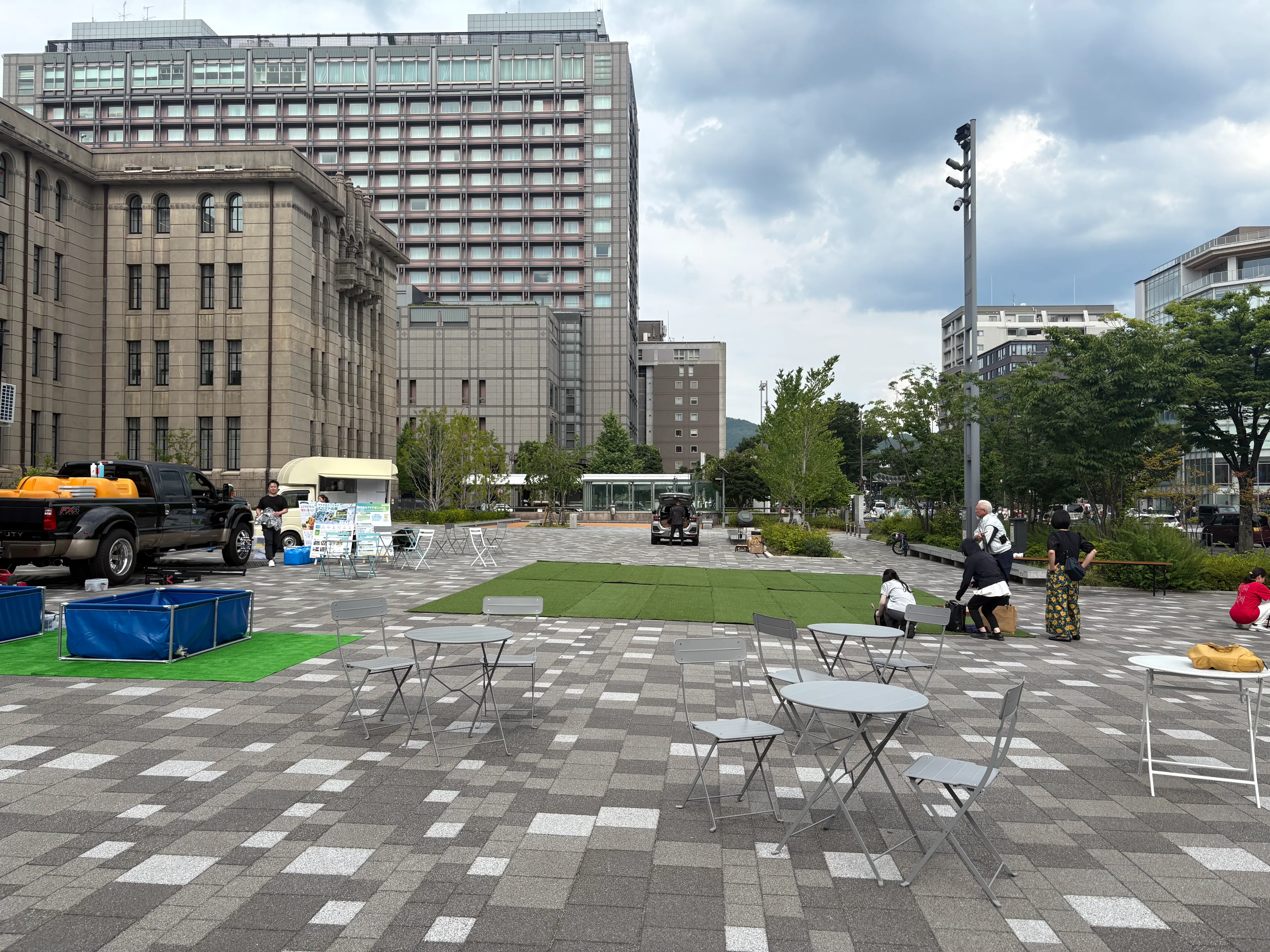
My first impression was that the space felt remarkably alive. I arrived early enough that I got to see the preparation process of city employees and organizers covering portions of the plaza with artificial turf, which instantly transformed the area into something that felt more like a park than a government building. Tables, lawn chairs, and open seating areas invited people to stop and stay rather than to simply pass through. Families with young children, students, older adults, and office workers gradually filled the space. I was struck by how comfortable everyone seemed. There was no pressure to buy anything or participate in any specific activity–people were simply enjoying being together.
As the function progressed, more and more visitors arrived and passerbys were noticeably curious. Conversations formed naturally between strangers and small children played while adults relaxed nearby, and local businesses and community organizations operated stalls and booths on the lawn, creating opportunities for visitors to learn about projects, products, and initiatives happening throughout Kyoto. The atmosphere felt free, welcoming, and genuinely community-driven.

One of the most rewarding parts of the event for me was speaking with several of the stall owners. I later learned that many of the participating businesses and groups had applied to take part in the Small Lawn Experiment themselves. No group or business viewed the gathering as simply an opportunity for promotion–many of the groups present seemed genuinely invested in contributing to the community atmosphere the event was trying to create. Every person I spoke with expressed excitement about both being there and also for their work, and their enthusiasm was contagious.
One of these groups was QUESTION, a community and innovation hub operated by 「京都信用金庫」, or THE KYOTO SHINKIN BANK. Made to tackle the challenge of how to build meaningful relationships with local residents as a bank, QUESTION was created as a place to explore “questions without clear answers” and to encourage dialogue, collaboration, and community engagement. On all but the sixth floor of the building, people can gather, exchange ideas, and work together in several co-working spaces, a community kitchen, and various meeting rooms for rent. Through this initiative, THE KYOTO SHINKIN BANK is exploring how a financial institution can contribute to community development and become an organization that is chosen and trusted by local residents.
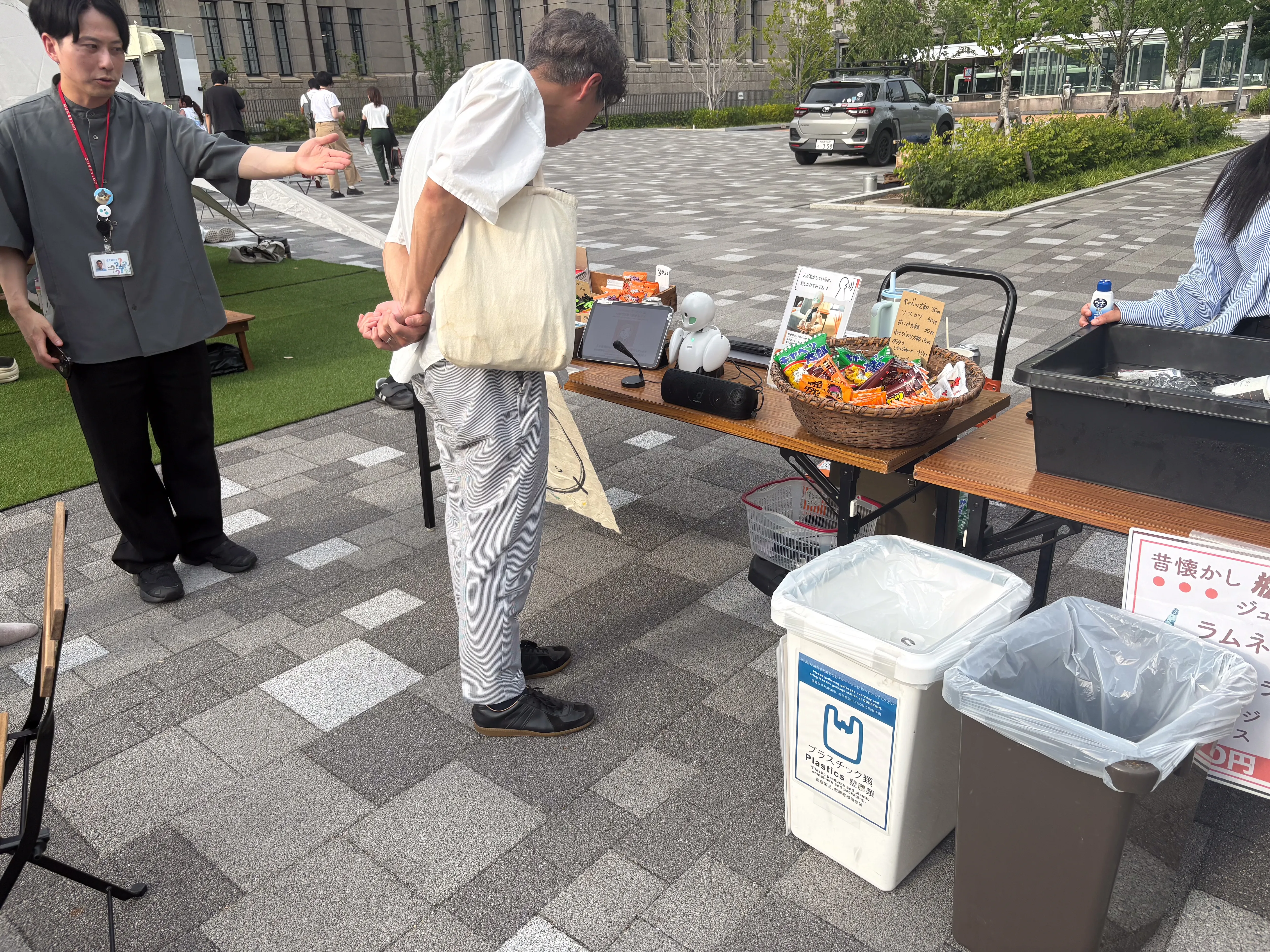
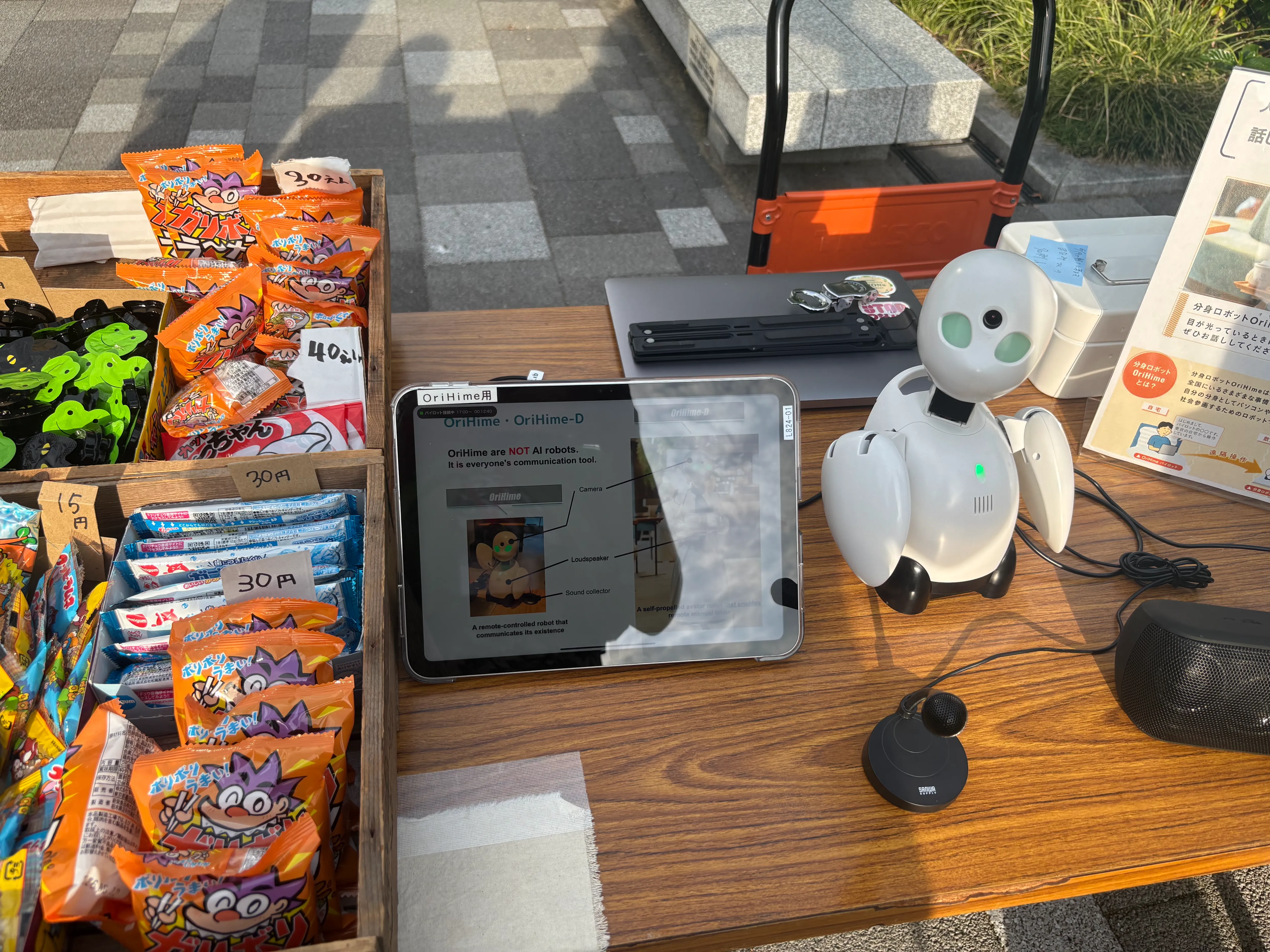
Further showcasing how deep this care for community-building was, QUESTION was also actively operating a dagashi booth–small snacks that are inexpensive enough that children can buy them with their own pocket money. A staff member explained that many local dagashi shops have disappeared in recent years, taking away opportunities for children to enjoy these familiar and safe community spaces. In response, THE KYOTO SHINKIN BANK created the dagashi shop as part of the event, providing children with an opportunity to purchase snacks and gather with friends. I was also very impressed by their use of a robot, OriHime. In Japan, to help people with disabilities or severe anxiety disorders, several companies have started using OriHimes, remote controllable robots, so that people can continue working and being out in society from their homes. At the QUESTION dagashi booth, I spoke with a real woman who was communicating with me through the OriHime in real time from her home. It was surreal, but also just showed me another way that QUESTION was putting in the effort to overcome obstacles so that people could better connect.
One of the other projects there, Aquaponics Lab, is an aquaponics start-up that has successfully managed fish farming and vegetable cultivation in a closed system via a mobilized container unit. The staff member that showed me around inside the unit explained to me that the system was fully off-grid with the use of solar panels installed on the roof and a battery storage unit that held enough charge to be without solar power for three days, and so the unit could be transported and operated in various locations.

He described the system as a “small Earth” because the waste produced by the fish provides nutrients for the plants while the plants help purify the water, and combined with renewable energy from solar power, the resources truly circulate within a self-contained ecosystem. Being inside a small functioning ecosystem like that was truly incredible–seeing the plants, the lights, and the fish connected so visibly in a loop reminded me of how deeply interconnected we all are.

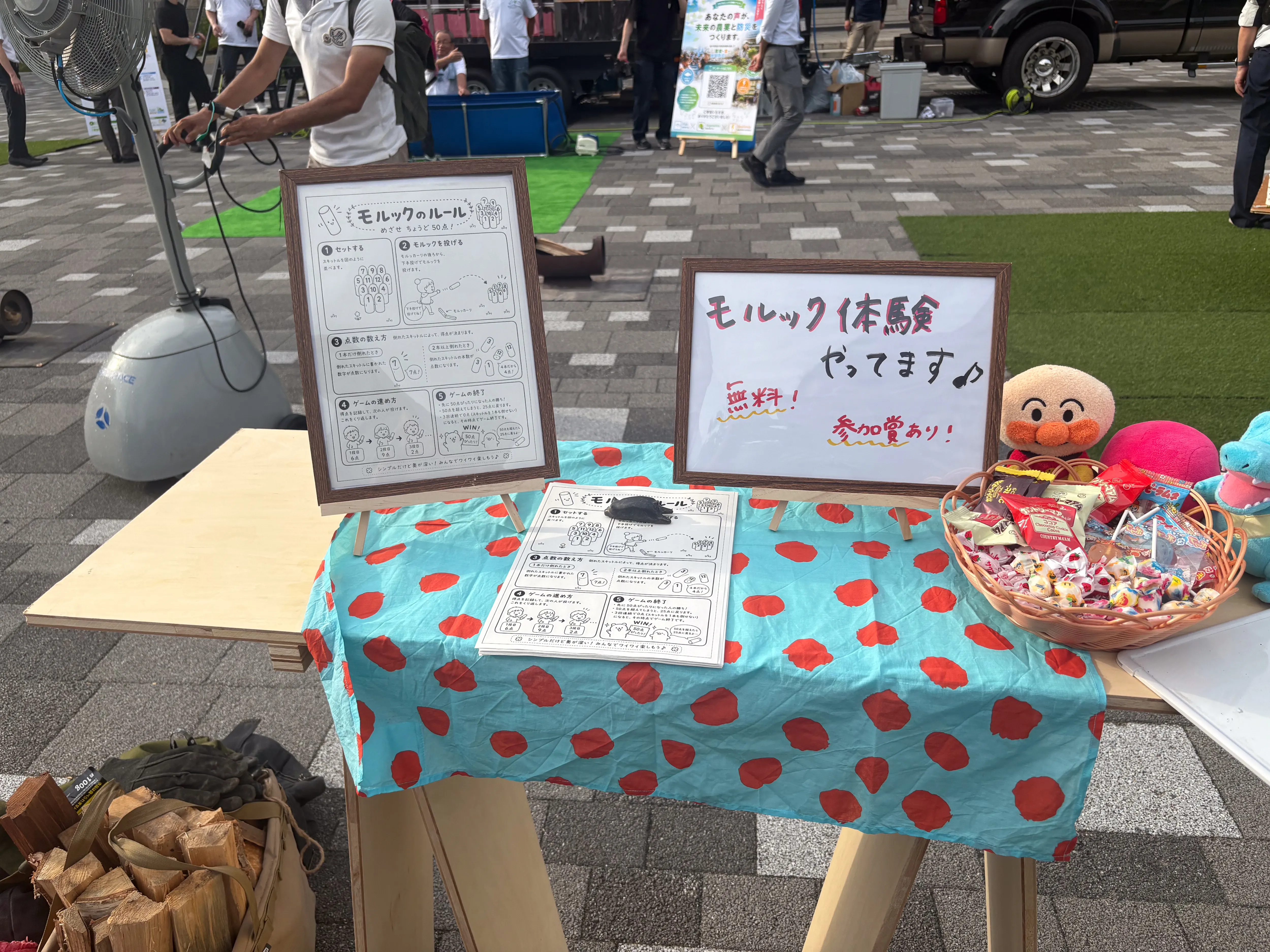
As I continued walking through the plaza, I found myself thinking about how unusual this type of event felt from my perspective as an American. In the United States, government buildings and even the officials themselves often feel separate from daily life. People enter into government spaces when they need a service but leave as soon as possible, and city officials are seen as far-away, apathetic entities. Here, however, the very front steps of Kyoto City Hall were functioning as a gathering place. The city was not simply providing services behind closed doors, it was actively creating opportunities for people to meet, talk, collaborate, and build relationships. People and government officers were playing Mölkky and laughing, were catching and releasing fish in a tank set up outside of the Aquaponics Lab truck, and were participating in bon odori, a type of traditional dance often done at festivals.
The philosophy behind the project was so perfectly executed–according to the organizers, the experiment started based on the belief that creative ideas and meaningful relationships often emerge from unexpected encounters between different people. By creating a welcoming public space, the city provided exactly those kinds of interactions.

In a world where many people feel increasingly isolated, that philosophy feels both simple and remarkably important. What I witnessed was not simply a community fair or outdoor market–it was an example of a city intentionally creating space for human connection. The conversations, the families enjoying the lawn, the local businesses sharing their passions, and the willingness of city employees to experiment with new ideas all contributed to something larger than a single afternoon. Kyoto’s greatest strength has always been its people and the communities they create together. Watching strangers gather on a patch of turf in front of City Hall may seem simple, but in many ways it represents the same spirit of stewardship that has allowed Kyoto’s cultural heritage to survive for centuries.
The Small Lawn Plaza Experiment is about so much more than a lawn. It is about preserving the conditions that allow a city, and the communities within it, to continue thriving for generations to come.

Citations:
TAGS
Date:
2026/7/1
Marie Koffie
Marie Koffie is an American intern from Arizona State University currently serving on the General Planning Bureau in Kyoto City Hall’s Population Strategy Office. Studying theatre with a concentration in acting, she is interested in the stories that connect people and communities. Her writing focuses on Kyoto’s local organizations, cultural initiatives, and the individuals working to build a vibrant and sustainable future for the city.